Tuesday, July 25, 2006

Shyamaladenfreude

john walker | 6:54 AM | Be the first to comment!
Thanks to Kairos for the tip on this article about Shyamalan and the upcoming book (The Man Who Hear Voices: Or, How M. Night Shyamalan Risked His Career on A Fairy Tale). NPH went to get the book at our local bookseller the other day, but it hadn't come in yet. You can bet we'll be reading it.

The article, written by Patrick Goldstein, is part book review and part movie review. The book, he's certain, is a damining tell-all that reveals the arrogance of Hollywood's most talked about directors. For its part, the movie sucks; it's little more than a stage for Shyamalan to show off himself and to air his grievances (casting himself as a tortured writer whose work will change the world and killing off a smarmy movie critic character). So goest the article.

It's hard to take issue with the piece. Even as staunch a Shyamalan apologist as NPH feels the need to acknowledge the guy's shortcomings. But we will still champion his work and what he's trying to do with his talent, and that is to tell original, meaningful stories through film, often defying the conventions of his business. Here's a money quote from the article, an answer given by Shyamalan's agent, Jeremy Zimmer:

"I told him this [the book] was dangerous — that the press will fixate on it. But
he saw the movie with himself in it. And you know what? It's his
vision. And if the business doesn't support it, he's not going to run
away and say, 'Oh well, I'll do "Jumanji 3." ' You can say he's preachy
or self-important, but who else is telling original stories out there?
He should be applauded, not derided."

Hear hear.
Read more ...

Sunday, July 23, 2006

NPH Gets An Online Video Tutorial on The Middle East

john walker | 7:37 PM | Be the first to comment!
NPH is no expert in Middle East politics; we know next to nothing, when you consider the vast amount of history and culture that feed present day violence. But we do know a little bit more now, thanks to Current TV, Reuters, and the BBC.

If you haven't heard of it before, Current TV is Al Gore's "citizen journalism" channel. Some people have been critical of it, calling it less bottom-up, independent journalism and more MTV-esque entertainment. But NPH has subscribed to Current TV's RSS feed for several months now, and we can honestly say that we have learned things we didn't know before, things that we would not have learned by watching CNN or reading the BBC.com.

Presently there are three pieces on Current's site that merit attention. This one, a little hands-on lesson in the basics of the Katyusha rockets being fired from southern Lebanon into northern Israel; this one, a primer on the city of Beirut itself and the Hezbollah political party, filmed mostly before the current fighting broke out; and this one (by the same correspondent that did the first one), a brief synopsis of the situation from inside Israel.

Don't expect these pieces to achieve the unbiased neutrality that has eluded the mainstream media; it doesn't exist. We all speak from somewhere, and we all carry assumptions and commitments that determine how we view any situation. But that's o.k. These pieces are still worth watching.

And so is this Reuters.com video on the continuing day-to-day routine in Beirut, and this one filed from northern Israel. The BBC, for its part, has a video report from Fergal Keane, NPH's favorite journalist in the world, taken from the city of Tyre.
Read more ...

Saturday, July 22, 2006

Aint It Cool News on "Lady . . ."

john walker | 7:14 AM | | Be the first to comment!
"You see, this is a film that asks you to not believe in the here and now. To not step foot in reality, but to step into a writer’s hands and just let him tell you a story, where he’s making it up as he goes along and where logic has little to no place. Where you can have a character with one gigantic muscled side of his body and tells everyone that he likes being scientific. It’s goofy like that. It’s innocent.

"If you can’t just go with the story, you’ll find yourself trapped in what some will call the most pretentious ego-trip ever committed to film. The people that hate this film will compare it to the biggest disasters ever made."


Exactly. Which is why NPH can handle it. Let M. Night tell you a story, and try not to notice the sound of his thoughts. Because if you do, you won't hear anything else. And that would be sad.
Read more ...

Slate on Shyamalan

john walker | 7:05 AM | | Be the first to comment!
Ross Douthat has a great piece about M. Night Shyamalan up right now. It's partly about the disappointing reception of "Lady in The Water," and partly about the soon-to-be-released book that chronicled the director's efforts to get the film made (The Man Who Heard Voices: Or, How M. Night Shyamalan Risked His Career on a Fairy Tale). But mostly the piece is about Shyamalan himself, his grandiose intentions and his heavily-scrutinized missteps. It's good reading. Here's a money quote:

    Shyamalan deserves credit, despite his vanity and his missteps—not
        because he's succeeding, necessarily, but because he's willing to keep
    trying and unwilling to take his place with those timid, highly
                        compensated directors who know neither victory nor defeat.

And that's why NPH will continue to champion Shyamalan and his movies. Despite the discomfiting emergence of his pretensions (note: his expanding roles in his own movies--this time as a struggling writer who's told that he will be killed for his painfully truthful ideas; also the role in "Lady . . ." of the glib film critic who's too cynical to see the real story and who, in the end, pays a heavy price for his cynicism), we still love the guy.

And "Lady in The Water" is still better than 75% of what's out there right now, and 50% of what the year will produce.


Read more ...

Friday, July 21, 2006

M. Night, NPH Forgives You

john walker | 7:30 PM | | Be the first to comment!

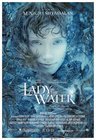
Way back in August, NPH flapped his arms all over the place to discuss our favorite filmmaker's latest project. "Lady in The Water," the sixth full length feature by writer and director M. Night Shyamalan, was to star Paul Giamatti and "The Village" heroine Bryce Dallas Howard. It promised to be another engrossing mythical yarn, set, of course in Pennsylvania.

Well, today the waiting finally ended, and NPH took in a matinee of the long-awaited film with the wife. We promised ourselves that we weren't going to let the reviews curb our expectations of the movie, since critics weren't exactly thrilled by "The Village," which NPH still thought was pretty darned good. But still, we read a bad review in the Pitch, and we glanced at rottentomatoes.com early on Thursday. What we read created the expectation of disappointment.

And disappointed we were. A little. I mean, "Lady in The Water" is still better than most of what you'll find in your local multiplex, especially in the summer; Shyamalan could craft a compelling story from a phonebook. It's just that the things he does with this film he's done before, and done them better. There's been a great deal of buzz about Shyamalan's feud with Disney, the producer of his last five films. When Disney told him they didn't like this script (which started as a bedtime story for his children and then morphed into an illustrated children's book before finally maturing as a screenplay), Shyamalan walked and took the thing to Warner Brothers. WB was only too happy to produce it, because the Philadelphia native's movies make lots of money. Plain and simple.

NPH is no film critic, so we'll not pick apart the merits of the thing. But we do deal in story on a fairly regular basis, so our disappointment can be located there, in the story. It's too intrusive. I mean, the beauty of Shyamalan's storytelling has heretofore been his ability to tell you a different story than the one you think you're being told. There is his trademark "surprise ending," in which the screen is pulled back to reveal something about the characters that changes the whole narrative. But "Lady in The Water" doesn't do that. Instead, the story you get is exactly the story you think you're getting. And that's because, from beginning to end, you're told about the story, you're reminded of the story, you're teased by the story--you look and look and look at the story. The Lady's name is actually "Story."

Shyamalan is trying to make a case for the reality of stories for real life. It's a beautiful case to make, and every one of his films makes it. The story is about ghosts or comic heroes or aliens or monsters in the woods or the Lady in The Water. No matter what the story's subject, its effect on reality is tangible and meaningful, and, above all, purposeful. It's only that, with "The Sixth Sense" and its successors, you're tantalized by the story so that its effect is accomplished before the viewer is aware what's happened. But with "The Lady in The Water," Shyamalan has made the story the subject of the story, so that you're never unaware of the effect that the story is supposed to have on you. Ultimately, you're in control of your relationship to the story, and that's not good.

There are things in this movie that Shyamalan fans will be well used to by now: the tragic and tortured protagonist who is an agent of redemption, the idiosyncratic supporting characters who turn out to be essential in their idiosyncracies, and, of course, the drumbeat of "purpose."

Shyamalan's quest for stories about purpose is, NPH believes, his greates virtue as a filmmaker and storyteller in these aimless times. All of his films grapple with the inconsequential and cooky, people and families trying to make meaning out of seemingly senseless circumstances. They are existential pep rallies for tortured souls (and those of us who love a good tale). It's just that, with this film, "purpose" appears from the very start and never lets up; you know what you're getting from the minute, in the opening credits, when you learn that the Lady has been "sent" to accomplish something. The thing's shot through with purpose, purpose, purpose. By the midpoint you almost want to scream, "What's the purpose behind all this purpose?!"

I love M. Night Shyamalan. I will always be the first in line to see his films. I just wonder if he's started to struggle, in this film, with his own purpose as a filmmaker and yarnspinner to the culture. He seems much more conscious of his image (note the American Express ads), even going back to the ill-conceived publicity stunt that preceded "The Village." Frankly, NPH is a little worried for him.

But, wander and experiment as he will, NPH will still be here, waiting, when his next film comes out.
Read more ...

What's This New TV Trend?

john walker | 7:07 AM | Be the first to comment!

NPH has been seeing trailers for a couple of fall shows on NBC that have us downright giddy, mostly for the people involved.

First there's Tina Fey, presently the head writer and Weekend Update anchor for Saturday Night Live. She allso wrote the hit movie Mean Girls. Fey has written a new show called "30 Rock," a comedy about a television writer for NBC who has to deal with the egos of a pampered cast (fellow SNLers Tracy Morgan and Rachel Dratch) as well as the self-obsession of her producer, played by Alec Baldwin.

NPH does not, as a rule, swear allegiance to television shows. We'll be watching this one, you can bet your sweet bippy.

Next there's "Studio 60 on The Sunset Strip," a drama written by West Wing creator Aaron Sorkin and starring Matthew Perry and Bradley Whitford. For NPH, Whitford is the draw here. Sorkin writes stuff that is far better than anything else out there (see seasons 1-4 of West Wing), and Perry is good for a giggle, but Whitford is just too good to miss. He's sardonic, clever, and compelling; NPH thinks he single-handedly carried The West Wing through its last three seasons. "Studio 60 . . ." centers on two producers (Perry and Whitford) who are brought in to save a flailing Friday night sketch comedy show on a network called NBS.


NPH is interested in these two shows for the trend that they may foretell: television shows about television shows. And not just that, but television shows about the production of television shows, inluding the sordid lives of the producers and the politics of the networks. Both of these shows are painfully obvious representations of real shows and a real network; 30 Rock is shorthand for the universally-known address (30 Rockefeller Plaza in Manhattan) of the NBC studio where SNL is broadcast, and "Studio 60 . . ." is a clear representation of SNL and NBC themselves.

What is this about? Is NBC trying to capitalize on the interest created by such behind-the-scenes books as Live From New York and Jay Mohr's Gasping for Airtime (both of which NPH has read and enjoyed deliriously)? Or are these shows a sort of dramatization of the reality TV trend, the next progression in tv artistry: remove the fourth wall, then put it back and build a show around its presence?

Whatever the trend indicates, NPH is going to be rushing home on Tuesday and Wednesday nights to see these shows.
Read more ...

Thursday, July 20, 2006

A Week of Breakups

john walker | 1:38 PM | Be the first to comment!
NPH has spent the week in the midst of breakups. There is the ongoing threatened breakup of the church in which we serve, with loud gesticulations coming from a renewal group as they gather at this very moment. Yesterday involved us in two breakup conversations, one with a person who said, "I think I know what I need to do," and the other with a person who said, "I don't know why she's doing this" (the two people don't know each other).

The week's soundtrack has been provided by The Submarines, "Peace and Hate," downloaded from the KCRW Today's Top Tune podcast. The song's a gem:

"Yell and shout and kick me out,
and forget what we fought about,
but don't give up--this storm is passing."

and

"Breaking down cannot be cured by breaking up."
Read more ...
Twitter Delicious Facebook Digg Stumbleupon Favorites More

Search

Pages

Powered by Blogger.