Saturday, July 22, 2006

Slate on Shyamalan

john walker | 7:05 AM | | Be the first to comment!
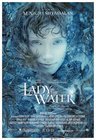
Ross Douthat has a great piece about M. Night Shyamalan up right now. It's partly about the disappointing reception of "Lady in The Water," and partly about the soon-to-be-released book that chronicled the director's efforts to get the film made (The Man Who Heard Voices: Or, How M. Night Shyamalan Risked His Career on a Fairy Tale). But mostly the piece is about Shyamalan himself, his grandiose intentions and his heavily-scrutinized missteps. It's good reading. Here's a money quote:

    Shyamalan deserves credit, despite his vanity and his missteps—not
        because he's succeeding, necessarily, but because he's willing to keep
    trying and unwilling to take his place with those timid, highly
                        compensated directors who know neither victory nor defeat.

And that's why NPH will continue to champion Shyamalan and his movies. Despite the discomfiting emergence of his pretensions (note: his expanding roles in his own movies--this time as a struggling writer who's told that he will be killed for his painfully truthful ideas; also the role in "Lady . . ." of the glib film critic who's too cynical to see the real story and who, in the end, pays a heavy price for his cynicism), we still love the guy.

And "Lady in The Water" is still better than 75% of what's out there right now, and 50% of what the year will produce.


Read more ...

Friday, July 21, 2006

M. Night, NPH Forgives You

john walker | 7:30 PM | | Be the first to comment!

Way back in August, NPH flapped his arms all over the place to discuss our favorite filmmaker's latest project. "Lady in The Water," the sixth full length feature by writer and director M. Night Shyamalan, was to star Paul Giamatti and "The Village" heroine Bryce Dallas Howard. It promised to be another engrossing mythical yarn, set, of course in Pennsylvania.

Well, today the waiting finally ended, and NPH took in a matinee of the long-awaited film with the wife. We promised ourselves that we weren't going to let the reviews curb our expectations of the movie, since critics weren't exactly thrilled by "The Village," which NPH still thought was pretty darned good. But still, we read a bad review in the Pitch, and we glanced at rottentomatoes.com early on Thursday. What we read created the expectation of disappointment.

And disappointed we were. A little. I mean, "Lady in The Water" is still better than most of what you'll find in your local multiplex, especially in the summer; Shyamalan could craft a compelling story from a phonebook. It's just that the things he does with this film he's done before, and done them better. There's been a great deal of buzz about Shyamalan's feud with Disney, the producer of his last five films. When Disney told him they didn't like this script (which started as a bedtime story for his children and then morphed into an illustrated children's book before finally maturing as a screenplay), Shyamalan walked and took the thing to Warner Brothers. WB was only too happy to produce it, because the Philadelphia native's movies make lots of money. Plain and simple.

NPH is no film critic, so we'll not pick apart the merits of the thing. But we do deal in story on a fairly regular basis, so our disappointment can be located there, in the story. It's too intrusive. I mean, the beauty of Shyamalan's storytelling has heretofore been his ability to tell you a different story than the one you think you're being told. There is his trademark "surprise ending," in which the screen is pulled back to reveal something about the characters that changes the whole narrative. But "Lady in The Water" doesn't do that. Instead, the story you get is exactly the story you think you're getting. And that's because, from beginning to end, you're told about the story, you're reminded of the story, you're teased by the story--you look and look and look at the story. The Lady's name is actually "Story."

Shyamalan is trying to make a case for the reality of stories for real life. It's a beautiful case to make, and every one of his films makes it. The story is about ghosts or comic heroes or aliens or monsters in the woods or the Lady in The Water. No matter what the story's subject, its effect on reality is tangible and meaningful, and, above all, purposeful. It's only that, with "The Sixth Sense" and its successors, you're tantalized by the story so that its effect is accomplished before the viewer is aware what's happened. But with "The Lady in The Water," Shyamalan has made the story the subject of the story, so that you're never unaware of the effect that the story is supposed to have on you. Ultimately, you're in control of your relationship to the story, and that's not good.

There are things in this movie that Shyamalan fans will be well used to by now: the tragic and tortured protagonist who is an agent of redemption, the idiosyncratic supporting characters who turn out to be essential in their idiosyncracies, and, of course, the drumbeat of "purpose."

Shyamalan's quest for stories about purpose is, NPH believes, his greates virtue as a filmmaker and storyteller in these aimless times. All of his films grapple with the inconsequential and cooky, people and families trying to make meaning out of seemingly senseless circumstances. They are existential pep rallies for tortured souls (and those of us who love a good tale). It's just that, with this film, "purpose" appears from the very start and never lets up; you know what you're getting from the minute, in the opening credits, when you learn that the Lady has been "sent" to accomplish something. The thing's shot through with purpose, purpose, purpose. By the midpoint you almost want to scream, "What's the purpose behind all this purpose?!"

I love M. Night Shyamalan. I will always be the first in line to see his films. I just wonder if he's started to struggle, in this film, with his own purpose as a filmmaker and yarnspinner to the culture. He seems much more conscious of his image (note the American Express ads), even going back to the ill-conceived publicity stunt that preceded "The Village." Frankly, NPH is a little worried for him.

But, wander and experiment as he will, NPH will still be here, waiting, when his next film comes out.
Read more ...

What's This New TV Trend?

john walker | 7:07 AM | Be the first to comment!

NPH has been seeing trailers for a couple of fall shows on NBC that have us downright giddy, mostly for the people involved.

First there's Tina Fey, presently the head writer and Weekend Update anchor for Saturday Night Live. She allso wrote the hit movie Mean Girls. Fey has written a new show called "30 Rock," a comedy about a television writer for NBC who has to deal with the egos of a pampered cast (fellow SNLers Tracy Morgan and Rachel Dratch) as well as the self-obsession of her producer, played by Alec Baldwin.

NPH does not, as a rule, swear allegiance to television shows. We'll be watching this one, you can bet your sweet bippy.

Next there's "Studio 60 on The Sunset Strip," a drama written by West Wing creator Aaron Sorkin and starring Matthew Perry and Bradley Whitford. For NPH, Whitford is the draw here. Sorkin writes stuff that is far better than anything else out there (see seasons 1-4 of West Wing), and Perry is good for a giggle, but Whitford is just too good to miss. He's sardonic, clever, and compelling; NPH thinks he single-handedly carried The West Wing through its last three seasons. "Studio 60 . . ." centers on two producers (Perry and Whitford) who are brought in to save a flailing Friday night sketch comedy show on a network called NBS.


NPH is interested in these two shows for the trend that they may foretell: television shows about television shows. And not just that, but television shows about the production of television shows, inluding the sordid lives of the producers and the politics of the networks. Both of these shows are painfully obvious representations of real shows and a real network; 30 Rock is shorthand for the universally-known address (30 Rockefeller Plaza in Manhattan) of the NBC studio where SNL is broadcast, and "Studio 60 . . ." is a clear representation of SNL and NBC themselves.

What is this about? Is NBC trying to capitalize on the interest created by such behind-the-scenes books as Live From New York and Jay Mohr's Gasping for Airtime (both of which NPH has read and enjoyed deliriously)? Or are these shows a sort of dramatization of the reality TV trend, the next progression in tv artistry: remove the fourth wall, then put it back and build a show around its presence?

Whatever the trend indicates, NPH is going to be rushing home on Tuesday and Wednesday nights to see these shows.
Read more ...

Thursday, July 20, 2006

A Week of Breakups

john walker | 1:38 PM | Be the first to comment!
NPH has spent the week in the midst of breakups. There is the ongoing threatened breakup of the church in which we serve, with loud gesticulations coming from a renewal group as they gather at this very moment. Yesterday involved us in two breakup conversations, one with a person who said, "I think I know what I need to do," and the other with a person who said, "I don't know why she's doing this" (the two people don't know each other).

The week's soundtrack has been provided by The Submarines, "Peace and Hate," downloaded from the KCRW Today's Top Tune podcast. The song's a gem:

"Yell and shout and kick me out,
and forget what we fought about,
but don't give up--this storm is passing."

and

"Breaking down cannot be cured by breaking up."
Read more ...

Friday, July 14, 2006

To Kathleen Parker: An Open Letter

john walker | 12:21 PM | Be the first to comment!
I'll try not to duplicate posts too much, but I wanted to put this letter both on religiononastick and here.

Dear Mrs. Parker,

As a blogger, I’m supposed to watch out for you and your ilk in the mainstream media. Folks tell me that the blogosphere functions as a sort of watchdog to the mainstream press of our country, making sure that reporters and columnists have their facts straight, the sources lined up, and their opinions, well, credible.

Consider this my free service to you.

In your column dated July 4 (”‘I Believe in Larry, Moe, and Curly Joe’”), you made a number of assertions that are incorrect. Writing about the 217th General Assembly of the Presbyterian Church last month, you state that delegates voted to “receive” a policy paper on gender, which is only partially accurate. First of all, kudos to you for nailing the verb “receive”; that one has proven elusive for others of your colleagues in describing what, exactly, the Assembly did. But I’m afraid it was a theological statement, not a policy paper, and it wasn’t about gender at all, but rather about the Trinity itself (or “himself,” if you must). Indeed, a cursory glance at the document’s title reveals this: “The Trinity: God’s Love Overflowing.”

That’s more than an academic distinction. You and yours (and by yours I include columnist like Charlotte Allen) have been all-too-eager to denounce the recent assembly as just the latest example of liberal Christianity pandering to the sensitivities of modern American culture, particularly when it comes to gender. Yet the theological statement on the Trinity does not have gender as a subject. Further, if you were to search the document (or perhaps, first, read it), you would be unable to find such words as “patriarchal” or “sexist,” words that any reader of yours would expect to see running amok in the statement’s text. Indeed, the closest thing you would get to the church placating feminist-run-amok culture would be the statement, “Only creatures who have bodies can be male or female. But God is Spirit and has no body” (line 351). Or perhaps the suggestion that “Femaile imagery for the Trinity has yet to be adequately explored” (line 362).

Good for you, though; in quoting from line 347 (”Trinitarian language has been used to support the idea that God is male and men are superior to women”), you succesfully exposed one of the statement’s four uses of the word “male,” a full quarter. Only, they’re all in the same paragraph. Further, in employing the “male” designation as often as it does, the statement is a veritable parade of chauvanism; “female” only appears twice (snicker with me, will you, at the realization that these goddess lovers have inadvertently reinforced sexism).

Ahem. Straightening up, then.

This will surely come as a disappointment to you. Lapsed adherents of any religion must have something with which to defend their lapse, and for American conservatives that something is most easily the culturally accomdating liberalism of the mainline denominations. The discovery, then, that the document is a serious work of Trinitarian Christian theology must take the wind out of your sails a bit.

But take hope. Because surely these Presbyterians are not able to discuss theology without stumbling into relativism and cultural minutae. As you say, “Irony seems to have gone missing as we worship our wombs and swoon over lost goddesses.” So, like affected snobs tinkering with dynamite, the drafters of the statement were sure to blow themselves up by yanking the wires of traditional doctrine.

Only, they didn’t do that either. In fact, they buried the wires of traditional doctrine deeper than ever, mandating that the hopelessly patri–oh, you know–”Father, Son, and Holy Spirit” is the only acceptable triad for invoking God in the sacrament of Baptism. I would expect that someone who so admires the sturdy immobility of the Catholic Church would appreciate such a move.

I hope this clarification reduces your obvious stress at the perceived flushing of traditional Christianity down the toilet of “whatever.” Unfortunately, if I’ve misread your reaction, if what I take for stress in your prose is actually glibness or self-satisfied piety, then I’m afraid I can’t help you. Only, perhaps, read the document.

Sincerely,

Not Prince Hamlet

Blogger, Presbyterian Minister

Read more ...

Wednesday, July 12, 2006

john walker | 7:02 AM | Be the first to comment!
The French Have Never Been This Funny

Just goes to show that the French can poke a little fun at their own, even in defeat. NPH is proud to say that we know the song used in the video, because we're married to a French-reared superstar. So there.
Read more ...

Marco I-think-you're-an-idiot Materazzi

john walker | 6:54 AM | Be the first to comment!
The player who got head-butted by Zinedine Zidane in the World Cup final has admitted to insulting him. Yesterday must have produced six different versions of what it was that Materazzi said to the Frenchman, ranging from "Terrorist" to "I'd rather have your wife's shirt." It's all speculation, because Zidane's not talking. Good for him.

But today Materazzi is talking. A little. "I did insult him, it's true," Materazzi said. "But I categorically did not call him a terrorist. I'm not cultured and I don't even know what an Islamic terrorist is."

Uh, excuse me? Materazzi doesn't know what an Islamic terrorist is? And he attributes that to his lack of culture?

That kind of fib is an insult to thinking people everywhere.
Read more ...
Twitter Delicious Facebook Digg Stumbleupon Favorites More

Search

Pages

Powered by Blogger.